How should men wear a polo shirt?
 By Maxime Coste•
June 25, 2026•
6 min read
By Maxime Coste•
June 25, 2026•
6 min read
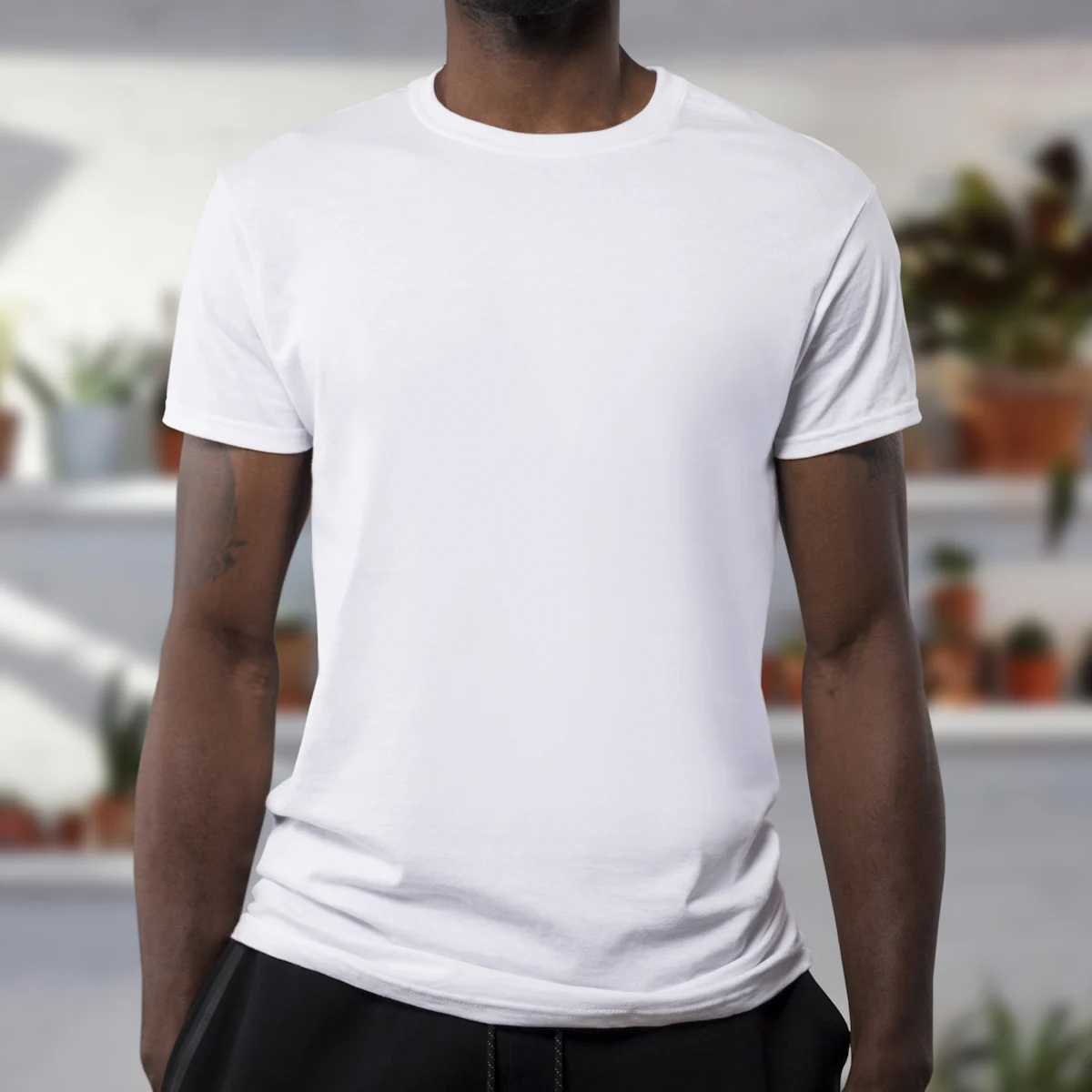
How should men wear a polo shirt without looking like they just left a corporate retreat? Three rules cover it: a fitted cut that ends mid-fly, a sober colour for your first one (navy, white, dark green), and trousers matched to the occasion, suit trousers at the office, chinos or jeans at the weekend. A well-cut piqué cotton polo at 40 euros dresses you better than a designer one that hangs off your shoulders. Everything else, fabric, patterns, shoes, comes down to a handful of simple decisions. Here they are, in order.
In short: how to wear a polo shirt, the 30-second version
- Fit: shoulder seam on the joint, sleeve at mid-bicep, hem at mid-fly. Never longer.
- Fabric: piqué cotton between 180 and 220 g/m² for summer, fine knit for a dressier register.
- Colours: navy, white, grey marl and dark green first. Brown and burgundy next.
- Buttons: one open, not two. Collar always flat, never popped.
- Office: plain polo tucked into tailored trousers, leather shoes. Weekend: untucked, over jeans or shorts.
Where the polo comes from, and why it matters
The polo shirt was designed by René Lacoste, the French tennis champion who wanted rid of the stiff long-sleeved shirts players wore on court. He cut the sleeves, borrowed the knitted cotton worn by polo players in British India, and began selling his shirt at scale through the Lacoste brand in 1933. Hence the name. That sporting origin explains everything about the garment: a polo is neither a t-shirt nor a proper shirt, it is sportswear with manners, one foot in each world. Fred Perry built on it in Britain, Ralph Lauren named his entire label after it in 1967. Few pieces of menswear carry that much history for so little fuss.
Choosing the right polo: cut, fabric, size
Before worrying about styling, buy a decent polo. Start with the cut. A polo should be fitted without clinging: shoulder seam on the joint, sleeve ending mid-bicep, hem at mid-fly so it works tucked or untucked. Too long or too wide and it shortens your whole silhouette. That is mistake number one, whatever your build. On a stockier frame, a clean straight cut flatters far more than a slim fit straining at the stomach.
Fabric next. Classic piqué, a cotton weave with a raised, textured surface, holds its shape, breathes and hides creases. Look for 180 to 220 g/m². Finer knits give a softer, dressier polo, closer to a summer sweater. Below 160 g/m², be suspicious: the fabric warps by the third wash. Budget 25 to 50 euros for a solid entry-level cotton polo, 80 to 150 euros for dense piqué or quality knitwear. Above that, you are mostly paying for the logo.
Then sleeves. Short sleeves in piqué for classic summer wear, anything above 22 °C. The long-sleeved polo, rarer and dressier, earns its keep in spring and autumn under an unstructured jacket, where a linen shirt would take over in real heat.
Which colours and patterns should you pick?
The navy polo is the starting point. It suits every skin tone, works with beige chinos, raw denim or grey trousers, and always reads dressier than a light shade. Then come white, grey marl, dark green, burgundy. And brown, the most underrated colour in the wardrobe: a brown or chocolate polo with ecru chinos is an outfit that gets noticed without trying. Light blue and pastels earn their place in summer, especially on tanned skin.
Patterns need more caution than plain colours. A fine stripe goes anywhere and comes back every summer. Loud prints, tropical or geometric, belong on holiday. The test is simple: if the pattern catches the eye before your face does, pick something else. As for logos? Small or absent. An 8 cm crest on the chest dates an outfit faster than any cut ever will.
How to wear a polo shirt for each occasion
Everything hinges on the trousers and the shoes. The same navy polo goes from office to terrace with a single change of trousers. Keep this table in mind:
| Occasion | Polo | Trousers | Shoes |
|---|---|---|---|
| Office (smart casual) | Navy or white, dense piqué, tucked | Suit trousers or dark chinos | Loafers or brown leather derbies |
| Out in town | Plain dark shade, untucked | Beige or ecru chinos | White leather sneakers |
| Weekend | Coloured or striped | Raw denim or chino shorts | Espadrilles, canvas sneakers |
| Summer dinner | Fine knit, long sleeves | Relaxed trousers in taupe or navy | Suede loafers |
At the office, a plain polo tucked into tailored trousers with a leather belt replaces the shirt once the thermometer passes 28 °C. The register stays sharp as long as the shoes stay dressy: loafers, derbies, never running shoes. With an unstructured summer suit, a fine-knit polo is a perfectly serious answer to the tie-versus-heatwave problem.
For a casual look, wear it untucked over chinos, or pair the polo with raw jeans, a clean hem and white sneakers. Skip the statement belt. The charm of the polo comes from that contrast: a garment with sporting roots over a sharp, quiet lower half.
Three outfits worth stealing
The summer office classic: navy polo tucked in, light grey trousers, brown belt and loafers, steel watch. Sober, efficient, zero risk.
The quietly stylish one: chocolate knitted polo, ecru chinos, suede loafers. Two warm colours, a cream-and-brown palette that signals you know what you are doing without shouting it. Want to push it further? Try wider trousers and play with proportions.
The weekend one: navy and white striped polo, raw jeans, canvas sneakers. Add a light cardigan in the evening and the outfit lasts until midnight. These three formulas cover 90 percent of the occasions where a polo belongs. For the rest, weddings or interviews, switch to a shirt.
Polo shirt mistakes to avoid
Knowing how to wear a polo shirt is mostly knowing what not to do. The popped collar, a dated reflex that has never flattered anyone. Both buttons wide open, which reads sloppy past 30. The overlong polo left hanging on the hips. The curling collar, caused by cheap piqué or skipped ironing. And the polo layered over a t-shirt, which should have stayed in the 2000s. Fix those five mistakes and you will already wear a polo better than most men you pass on the street. My advice fits in one sentence: treat the polo like a shirt, not like a t-shirt.
Frequently asked questions
Can you wear a polo shirt to the office?
Yes, as long as it is plain, fitted and in a sober colour (navy, white, grey). Tucked into tailored trousers with a leather belt and dress shoes, it replaces a shirt on hot days in a smart casual register that almost every workplace accepts.
Should a polo be tucked in?
Tucked in, a polo looks dressier and suits the office or a dinner. Untucked, it is more relaxed and right for the weekend, provided the hem stops at mid-fly and no lower.
Which polo colour should you buy first?
Navy, without hesitation: it flatters every skin tone and works with any trousers, from jeans to flannel. White and grey marl complete the base, and brown adds the style points later.
Short sleeves or long sleeves?
Short sleeves in classic piqué for summer. Long sleeves in a finer knit for spring and autumn, under an unstructured jacket or on their own with tailored trousers.
Maxime Coste writes about menswear, well-cut basics and dressing well without overspending. He tests, wears and recommends pieces made to last several seasons.