How should men wear a trench coat?
 By Maxime Coste•
August 31, 2026•
6 min read
By Maxime Coste•
August 31, 2026•
6 min read
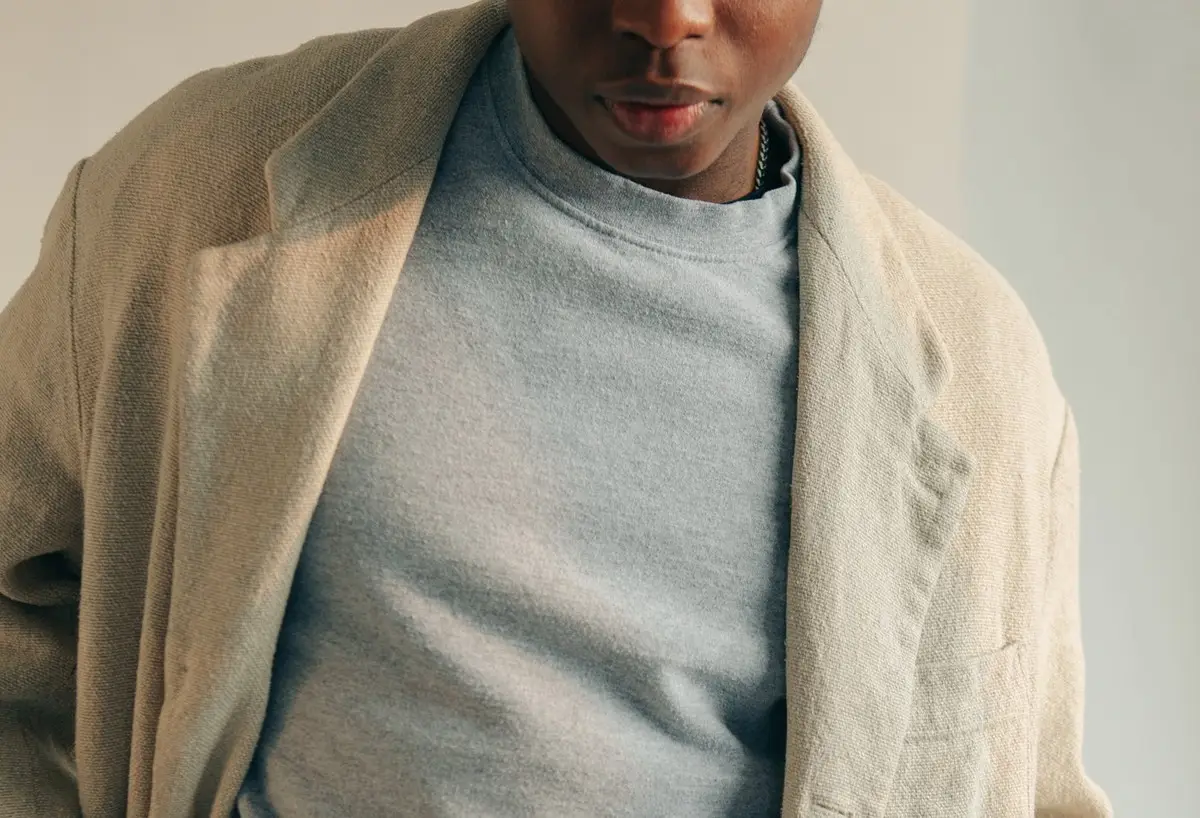
Thomas Burberry patented gabardine in 1888, a cotton woven so tightly that it turned rain away without rubber. Thirty years later the garment was issued to officers in the trenches, which is where the name comes from. That military heritage explains every detail of the trench coat you try on today: the epaulettes carried insignia, the storm flap shed water, the D rings held kit. It is also why it is the hardest mid season coat to date.
Three decisions separate a trench that suits you from one that wears you:
- Length, at the knee or just above if you are under 1.80 m.
- Colour, sand beige or navy before anything else.
- The belt, knotted at the side, never buckled like a dressing gown.
Which trench length suits your height?
The classic cut falls below the knee. It is superb on a tall silhouette and it flattens everyone else. Under 1.80 m, a short trench ending mid thigh or just above the knee rebalances everything: the leg reads longer, walking is easier, and the coat finally works over jeans. Above 1.85 m the long version wins again and gives that film noir line nothing else produces.
| Length | Who for | Register |
|---|---|---|
| Mid thigh (short trench) | Up to 1.78 m | Jeans, sneakers, city |
| At the knee | 1.75 m to 1.85 m | The most versatile |
| Below the knee | From 1.82 m | Suits, formal wear |
Then check shoulders and sleeves, exactly as on any men's suit: the shoulder seam lands on the bone, the sleeve stops at the base of the thumb, and you should be able to wear a jacket underneath without the back pulling. A trench goes over layers, so you size it against your jacket, not your t-shirt.

Beige, navy or black: which colour for a first trench?
Sand beige is the original, the one that pairs with grey, blue, white and denim without thinking. It has one real flaw: it picks up city grime and copes badly with muddy downpours. Navy solves that, sits more easily over a dark suit and stays discreet in the evening. Khaki works in a more casual register. Black comes last: it hardens the face, drifts towards town coat territory and loses what makes a trench interesting, that faded military feel. To choose between shades already hanging in your wardrobe, our guide to matching colours in an outfit gives the combinations that hold up.
Gabardine, water repellent cotton, lining: reading the label
The fabric decides how long the coat lives. True cotton gabardine, dense and slightly matte, is still the benchmark: it blocks wind, dries fast and ages well. Cotton and polyester blends at 30 % or less gain crease resistance without turning plastic. A water repellent finish makes rain bead on the surface for a few years and needs reviving with a spray after ten or so washes. Watch the wording used by brands: a trench sold as 100 % waterproof is nearly always coated, so sealed but barely breathable. In an October shower, repellent protection is more than enough; in two hours of steady rain, no trench replaces a technical shell.
Finally, look at the lining. A removable wool lining turns the piece into a light winter coat and adds two months at each end of the season. When the cold sets in for good, our ranking of the best coat brands for men takes over. That is the detail worth a hundred euros more.
Three ways to wear a men's trench coat
Over a suit, midweek
Beige or navy trench at the knee, grey or blue suit, black or brown derbies. The coat must clear the suit jacket by 8 to 10 centimetres, otherwise the proportions look wrong. Belt knotted, never buckled, collar down until it actually rains. Nothing is perfect here: adapt the coat length to the jacket, not the other way round.
Over a knit and jeans, at the weekend
Short trench, fine knit, raw men's jeans, leather boots. The easiest look to get right, and the one that makes a trench wearable twelve days a month instead of three.
Over a blazer, smart casual
Navy trench worn open, wool men's blazer, plain shirt, chinos, loafers. Two jackets layered need controlled volume: the trench must be fitted through the shoulders, not roomy, or the silhouette doubles in width.

Belt, collar, cuffs: the small moves that change the line
The belt is knotted flat at the side, the knot slightly off centre, the ends tucked through the loops. Buckled straight at the front it reads as a bathrobe. Left hanging it drags in train doors. The collar goes up only when the wind justifies it, otherwise the effect turns theatrical. Cuffs get one turn, not three. Two seconds of adjustment. Those three finishing styles cost nothing and show up instantly in a photograph.
Price, care and lifespan
Budget 200 to 400 euros for a decent gabardine from a mainstream brand, 600 to 1,200 with a coat specialist, and considerably more at the historic houses. The second hand market is unusually good on this garment: a 1990s trench in pure gabardine often beats a new 250 euro coat, for half the money. Check the shoulder seams, the state of the lining and the smell of the cloth; the rest can be cleaned. Those details take two minutes to inspect and rule out 90 % of bad buys.
Care: brush it regularly, dry clean once a year at most, dry flat over a wide hanger. A well treated trench lasts fifteen years, which makes it one of the best value buys in menswear and a genuinely timeless piece rather than a marketing one. It slips into a whole existing collection without making anything else obsolete.
Frequently asked questions
When should you wear a trench coat?
Between 8 and 18 degrees, in spring and autumn, in damp or windy weather. Below 8 degrees you need a removable lining or a thick knit; above 18 it becomes pointless.
How do you tie a men's trench belt?
Flat, at the side, with a simple knot and the ends tucked into the loops. Avoid the front buckle, which looks like a dressing gown, and never let the belt hang loose.
What trench length works for a man of 1.75 m?
Just above the knee, or mid thigh for a more modern line. Anything falling below the knee shortens the silhouette under 1.80 m.
Maxime Coste writes about menswear, well-cut basics and dressing well without overspending. He tests, wears and recommends pieces made to last several seasons.